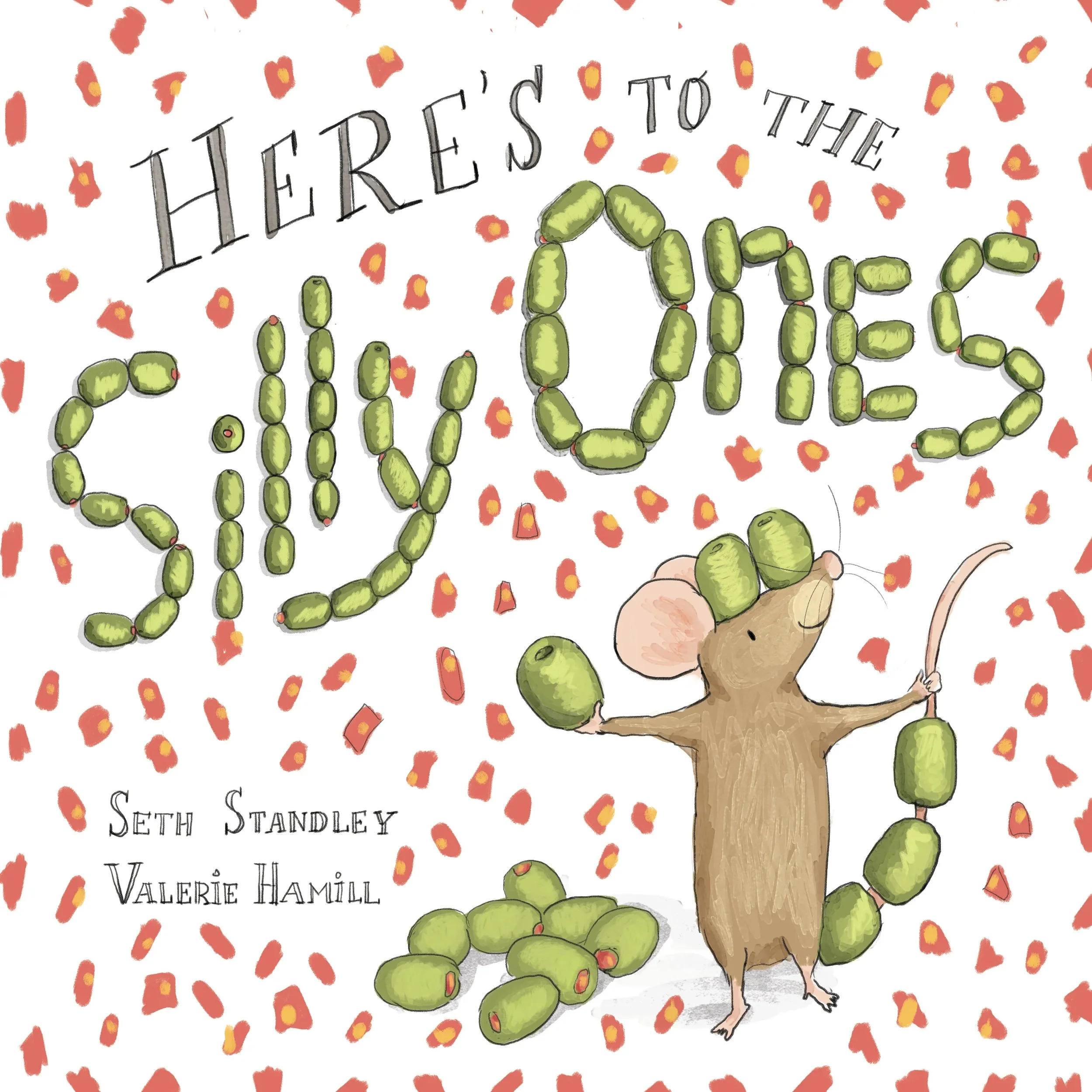
Here's to the Silly OnesTeacher's Aid-
Goal: Generate and conceptualize artistic ideas and work.
Materials: Butcher paper (lots), painter’s tape, markers, pens, pencils, etc.; examples from artists who “don’t follow rules,” e.g., Jackson Pollock, Jean-Michel Basquiat, and (especially) Yayoi Kusama, as well as a few who “follow rules” like Rembrandt and Michelangelo.
Content:
When artists make something to look at, they decide whether they’re going to follow traditions or break them.Some artists put their art in different (untraditional) places.
Some artists make their art in different (untraditional) ways.
Procedure:
Talk about “rules” of drawing that the group can decide on together, then give examples for how we might break them in our drawings today. Give examples like “the sun is supposed to go in the sky. Maybe today you put it underwater. Trees are supposed to have green leaves. Today? Maybe they’re rainbows.” Prompt them by asking “What rules do you follow when you draw people? Nature? Farms? Anything else?”Cover the room in butcher’s paper - tables, cabinets, walls - anything kids can reach - and let them color on it. Describe it as mural art that doesn’t follow the rules. Have children describe their art as “not following the rules.”
Measurement: Can the child name a rule they broke and what they did instead?
-
Goal: Understand how circumstances and events influence personal emotions.
Materials:
Here’s to the Silly OnesThe Boring Book by Shinsuke Yoshitake
I’m (Almost) Never Bored by Anna Milbourne and Åsa Gilland
There’s Nothing to Do by Dev Petty and Mike Boldt
Content:
Boredom means feeling like what you’re doing isn’t interesting.It’s okay to be bored.
It’s also okay to try to not be bored.
There are lots of ways we can help ourselves to feel less bored, including getting silly.
Procedure:
After you have read some books about being bored and have discussed with students the feeling of boredom, have the children share examples of moments and events when they have felt bored. Discuss ways in which the characters deal with the situations to help them manage the bored feelings. Talk about positive and negative strategies people use when they are trying to manage bored feelings.Measurement: Can the child name one strategy for an unwanted feeling and say whether it helps or hurts?
-
Goal: Practice thinking flexibly; take familiar objects and brainstorm unexpected uses.
Materials: Ordinary objects (e.g., a cup, pencil, paper clip, rock, ball, piece of paper, etc.)
Content:
Most things have one job we all agree on.But if you think about what a thing is really like (its shape, its parts) you can find jobs nobody expected.
Procedure:
Read Here’s to the Silly Ones. Hold up an object: "What's this for?" Kids give the obvious answer. Establish that things have one job. Now break that rule: "What ELSE could it be?" Challenge responses with “how?” Point out how the physical properties of the objects are what makes them useful in these situations (paperclips bend, cups are hollow, etc.) Try out some of the suggestions if possible. Repeat with a few objects. To close, ask "Was there only one right answer?”Measurement: Are students justifying a new use with a “because”? Is there a reason related to a physical property of the object?
-
Goal: Speak audibly and express thoughts, feelings, and ideas clearly.
Content:
The same words carry different meaning depending on how you say them.Materials: Paper or white board to record lines.
Procedure:
Have each student come up with a three-word sentence following this structure: The noun verbs. Help them write it down or do so yourself.Now have them hum it.
Now have them shout it.
Now have each child sing their line. Provide tunes or sing along with them as needed.
Now have them come up with another sentence that rhymes with the first one. Scaffold as needed.
Discuss how they all felt different and meant different things depending on how we communicate it. How did singing the line change how the listeners felt about it? How did shouting it make them feel? Did humming change anything? How did adding the rhyming sentence change it?
Extend by trying different ways of shouting and singing. Add adjectives and/or adverbs to your sentences.
Measurement: Does the child's delivery actually change?
-
Goal: Perform standard locomotor movements and invent one original "silly" locomotion.
Materials: Step stool or similar safe “climbing” (stepping) surface.
Content:
Everyone's body moves a little differently.Everybody enjoys moving in different ways.
We can invent brand-new silly ways to move.
Procedure:
Warm up with the "normal" versions: hop, skip, gallop, slide. Now invent “silly walk.” Each student creates and names a way to cross the room; the whole group copies it. Encourage them to incorporate stepstools and other safe “obstacles.” Reflect: Did everyone have the same ideas? Did everyone do it exactly the same way, even when they were copying the same move? Just like dancers, athletes, and other physical performers, each individual moves in their own unique ways.Measurement: Does the child produce a novel movement instead of repeating one you showed them?
-
Goals: Understand how humor affects us and others; practice being silly in ways that include rather than exclude; distinguish laughing with someone from laughing at someone.
Content:
Laughing together helps people feel good and connected.Laughing at someone to make them feel small is different from laughing with them.
Being silly is a way to share joy and pull people in.
Procedure:
Read Here's to the Silly Ones as the anchor. Find a moment where a character is silly and ask: are we laughing with them or at them? Circle time: Have each student perform one silly thing. Encourage the group to laugh with them and applaud, so every child gets the experience of safe, celebrated silliness.Now ask “How do you tell ‘laughing with’ from ‘laughing at?’” Describe a made-up moment when someone might have felt laughed at (e.g., dropping their lunch tray), and ask the class to brainstorm how that person might feel what bystanders could do instead of laughing in a situation like that.
Measurement: Can a child give an example of laughing with vs. laughing at in their own words?
A Seriously Silly Cross-Domain Unit
Silliness usually gets treated as the opposite of learning. Sometimes it seems like a teacher’s primary job is getting their students to be serious. This unit uses silliness as a uniting theme across six developmental domains. In every lesson, being silly is used a tool and treated as something to be embraced.
Ages: K–3 (adaptable)
Format: Six standalone lessons
What you'll need: Mostly nothing! Per-lesson materials listed.